
Do Dogs Need Coats in Winter? Thermal Testing Data, Durability Results and Evidence for Small Breeds | SunPetJoy
06/04/2026
How to Measure a Dog for a Coat – Practical Size Chart with Factory Quality Proof
06/08/2026Summer Pet Care Guide | Canine Thermoregulation | Product Evidence
Do Dogs Sweat? Summer Care Guide and Evidence-Based Dog Cooling Vest Review
Dogs do sweat, but not like humans. Their sweat glands are mainly located in the paw pads, while their primary cooling method is panting. That means summer care cannot rely on “sweating” alone. Pet owners need shade, water, airflow, limited exercise, and breathable support products such as a cooling jacket for dogs or a dog cooling vest that helps reduce heat-trapping discomfort during warm-weather routines.
Written from a Manufacturing Perspective
This guide is written by the SunPetJoy Pet Product R&D Team. As a pet apparel factory established in 2001 with 25+ years of production experience, we evaluate summer dog cooling apparel not only by appearance, but also by fabric breathability, moisture behavior, evaporation efficiency, seam stability, sizing tolerance, and repeat-use durability. This includes practical product categories such as cooling clothes for dogs, canine cooling vests, and lightweight outdoor cooling gear for dogs.
Safety Positioning
A cooling jacket for dogs, cooling pet vest, or canine cooling jacket can support summer comfort, but it should not be presented as a medical product or guaranteed heatstroke prevention device. It must be used together with water, shade, ventilation, rest breaks, and responsible activity control.
Do Dogs Sweat? The Science of Canine Thermoregulation
Humans cool down by sweating across large areas of skin. When sweat evaporates, it removes heat from the body surface. Dogs are different. They do have sweat glands, but the cooling-related glands are concentrated mainly in the paw pads. This is why a dog may leave damp paw prints on a hot day, yet still become overheated. Paw-pad sweating only releases a small amount of heat.
The main cooling process for dogs is panting. When a dog pants, moisture evaporates from the mouth, tongue, and upper respiratory tract. This evaporation helps remove heat, but it depends heavily on airflow, hydration, outdoor temperature, humidity, and the dog’s breathing efficiency. For summer product design, this means dog clothing should never trap heat or restrict chest movement.
Paw Pad Sweating
Real, but limited. It cannot cool the whole body like human sweating.
Panting
The primary cooling pathway. It becomes less effective in high heat, high humidity, or poor ventilation.
Behavioral Cooling
Dogs seek shade, water, rest, cool flooring, and airflow when heat load increases.
Product Support
Cooling apparel should reduce heat trapping, not restrict breathing, chest expansion, or natural movement.
Why Dogs Are Prone to Overheating in Summer
Dogs can overheat during ordinary summer activities: short walks, outdoor play, car rides, grooming appointments, training sessions, or pet store events. The risk increases when the dog cannot move away from heat, cannot access shade, or cannot cool efficiently through panting.
High-Risk Dogs Need Extra Caution
- Short-nosed breeds such as French Bulldogs, Bulldogs, Pugs, and Boston Terriers.
- Senior dogs, overweight dogs, puppies, and dogs with heart or respiratory problems.
- Thick-coated or dark-coated dogs exposed to direct sun.
- Dogs walking on hot asphalt, sand, artificial turf, or heat-radiating pavement.
- Dogs inside parked vehicles, even when the windows are slightly open.
| Risk Factor | Why It Matters | Practical Prevention |
|---|---|---|
| Humidity | Evaporation slows down, making panting less effective. | Shorter walks, more rest breaks, shaded routes, water access. |
| Hot pavement | Paws can burn and radiant heat increases body stress. | Walk early morning or evening; test ground temperature first. |
| Poor airflow | Panting depends on evaporation and air movement. | Use fans, open airflow areas, breathable products, and shade. |
| Parked cars | Car interiors can become dangerous quickly, even when outdoor weather feels mild. | Never leave a dog alone in a parked vehicle. |
How Cooling Jackets and Evaporative Dog Cooling Vest Designs Work
A dog cooling jacket should not be judged only by color or shape. The more important question is how the garment helps manage heat around the dog’s body. Cooling designs usually rely on one or more mechanisms: evaporative cooling, breathable fabric structure, light-color reflection, or phase change material. In retail search behavior, customers may compare a dog cool suit, an evaporative dog cooling vest, or a lightweight summer cooling pet vest, but the real value still depends on fabric structure, fit, water activation method, and airflow.
Evaporative Cooling
The fabric holds moisture, and as water evaporates, it removes heat from the jacket surface. This works best with airflow and lower humidity.
Breathable Fabric Design
Lightweight and air-permeable fabric reduces trapped warm air under the garment and supports easier movement.
Phase Change Material
PCM absorbs heat at a controlled temperature range, but it may increase cost, weight, and preparation complexity.
Light-Color Reflection
Light colors may absorb less solar heat than dark dense fabrics, supporting better summer comfort positioning.
Infographic: A Practical Summer Cooling Routine
Check Heat
Avoid peak heat and test pavement.
Add Water
Carry clean drinking water.
Use Shade
Plan shaded routes and rest breaks.
Wear Smart
Choose breathable, lightweight cooling gear for dogs.
Stop Early
Watch for heavy panting or weakness.
Product Visual
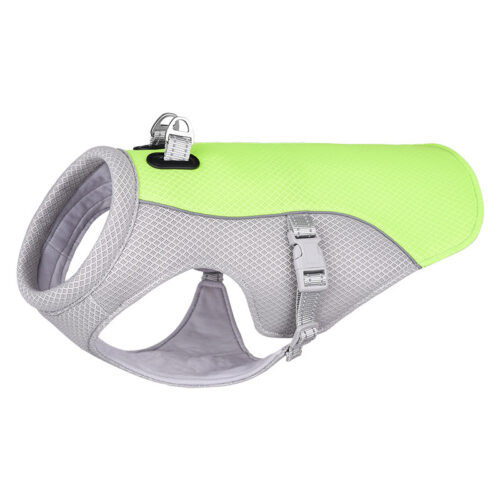
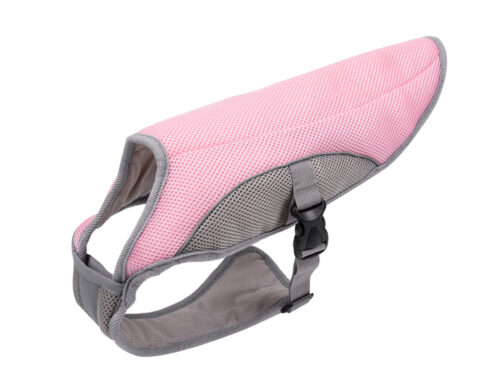
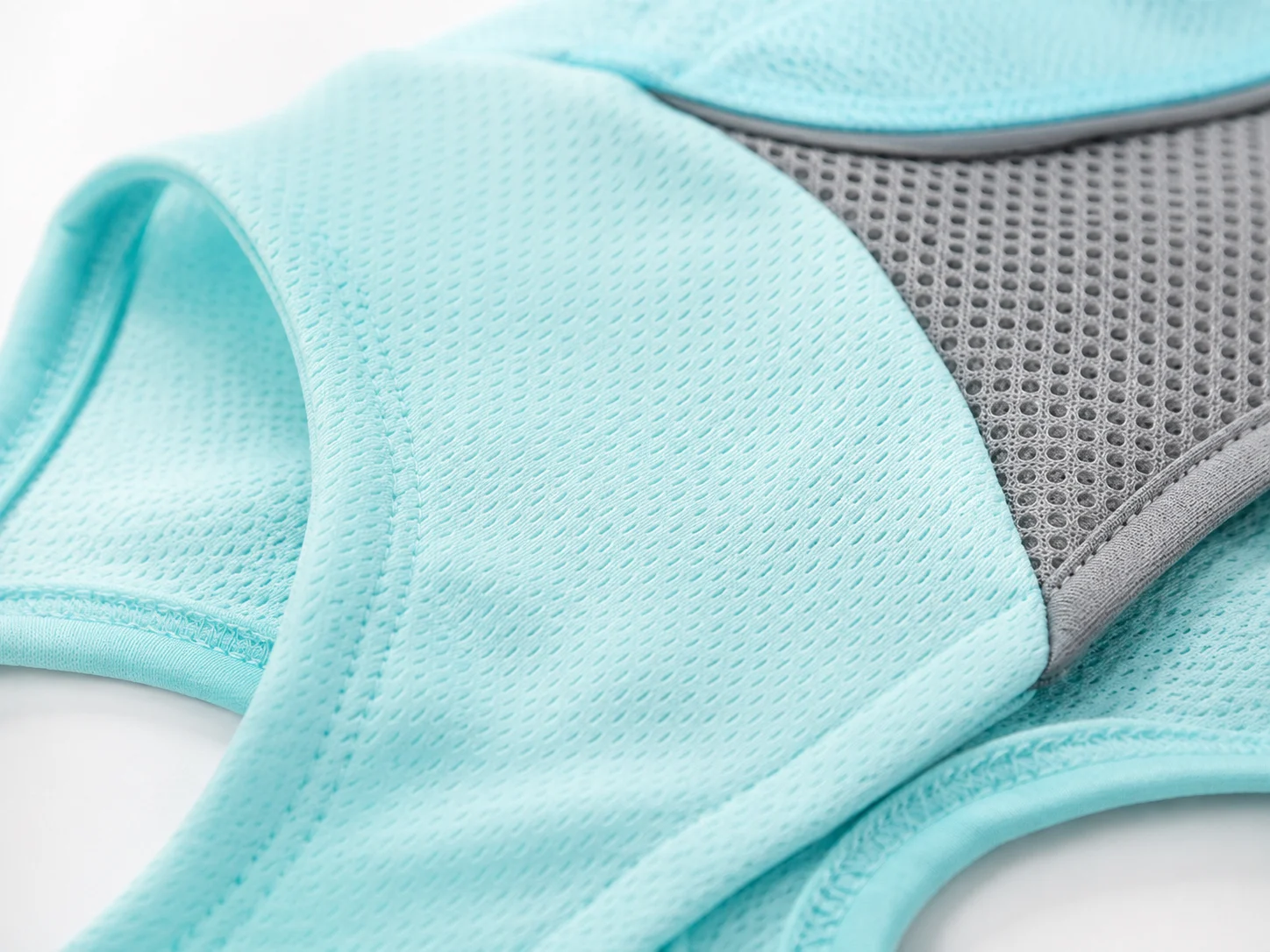
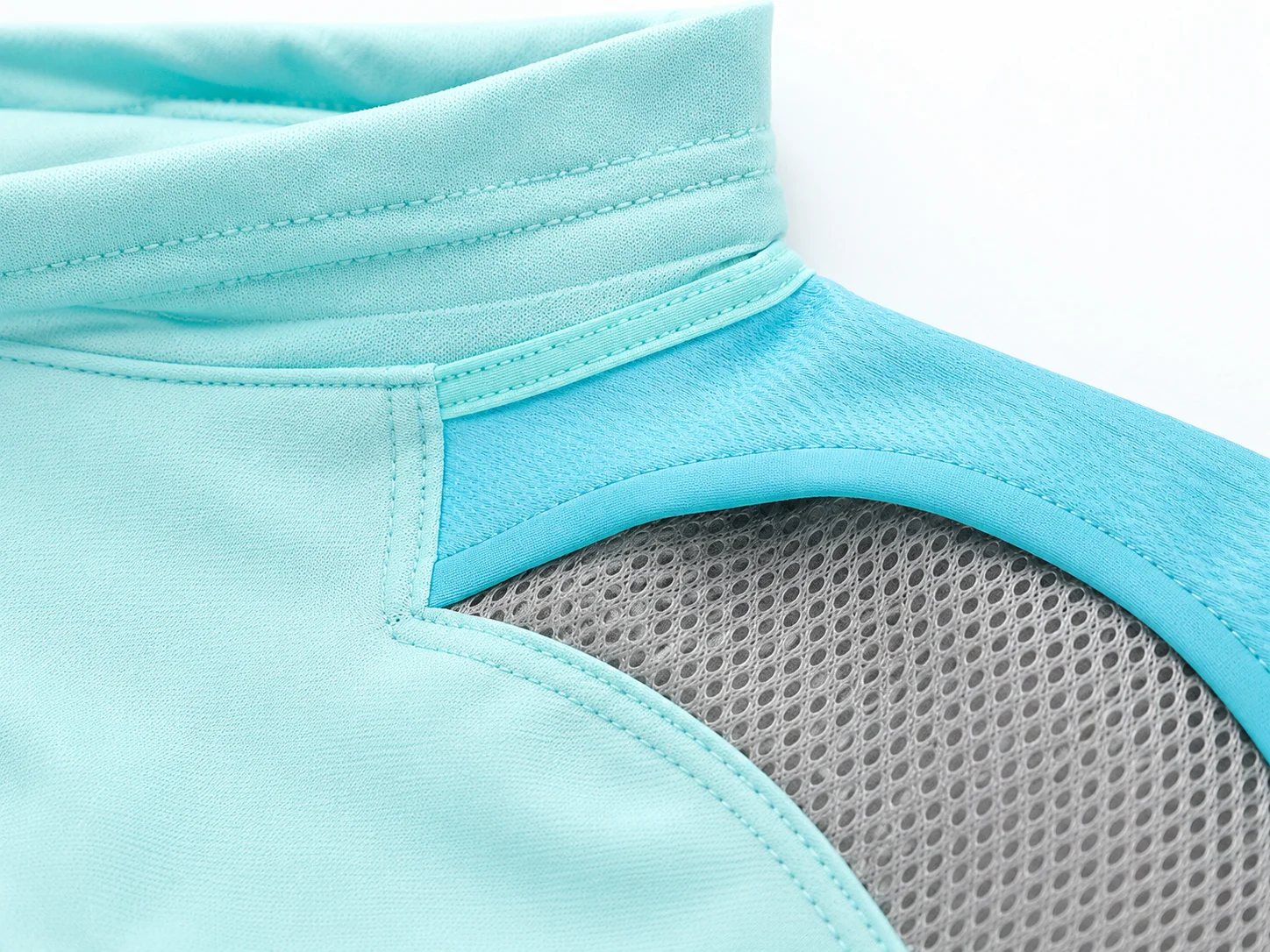
Fabric Detail
Testing Visual
Factory Process
Factory process images show whether a cooling jacket can be consistently repeated in bulk production. SunPetJoy uses material preparation, digital pattern cutting, sewing control, and 100% inspection to improve product consistency for wholesale buyers.



What Makes the Best Dog Cooling Vest or Cooling Jacket for Dogs?
A quality dog cooling jacket should be easy to explain to customers, comfortable for dogs, and consistent in bulk production. For retailers, the best dog cooling vest is not simply the coldest-feeling product on the shelf. It should combine functional material, accurate sizing, practical care instructions, reliable QC, and clear customer education around safe summer use.
| Feature | Why It Matters for Dogs | Why It Matters for Retailers |
|---|---|---|
| Lightweight polyester | Reduces wearing burden and supports airflow. | Easy summer selling point and clear product differentiation. |
| Body-contouring fit | Helps reduce twisting, slipping, and movement restriction. | Fewer sizing complaints and better review potential. |
| Evaporation-friendly structure | Supports warm-weather comfort when used correctly. | Useful for listing images, retail signage, and product education. |
| Washable construction | Keeps product suitable for repeated outdoor use. | Supports repeat purchases and reduces after-sales questions. |
| OEM/ODM options | Allows fit, color, and packaging to match market demand. | Builds private-label identity and shelf differentiation. |
Product Specification, Size Range, Colors, and Care
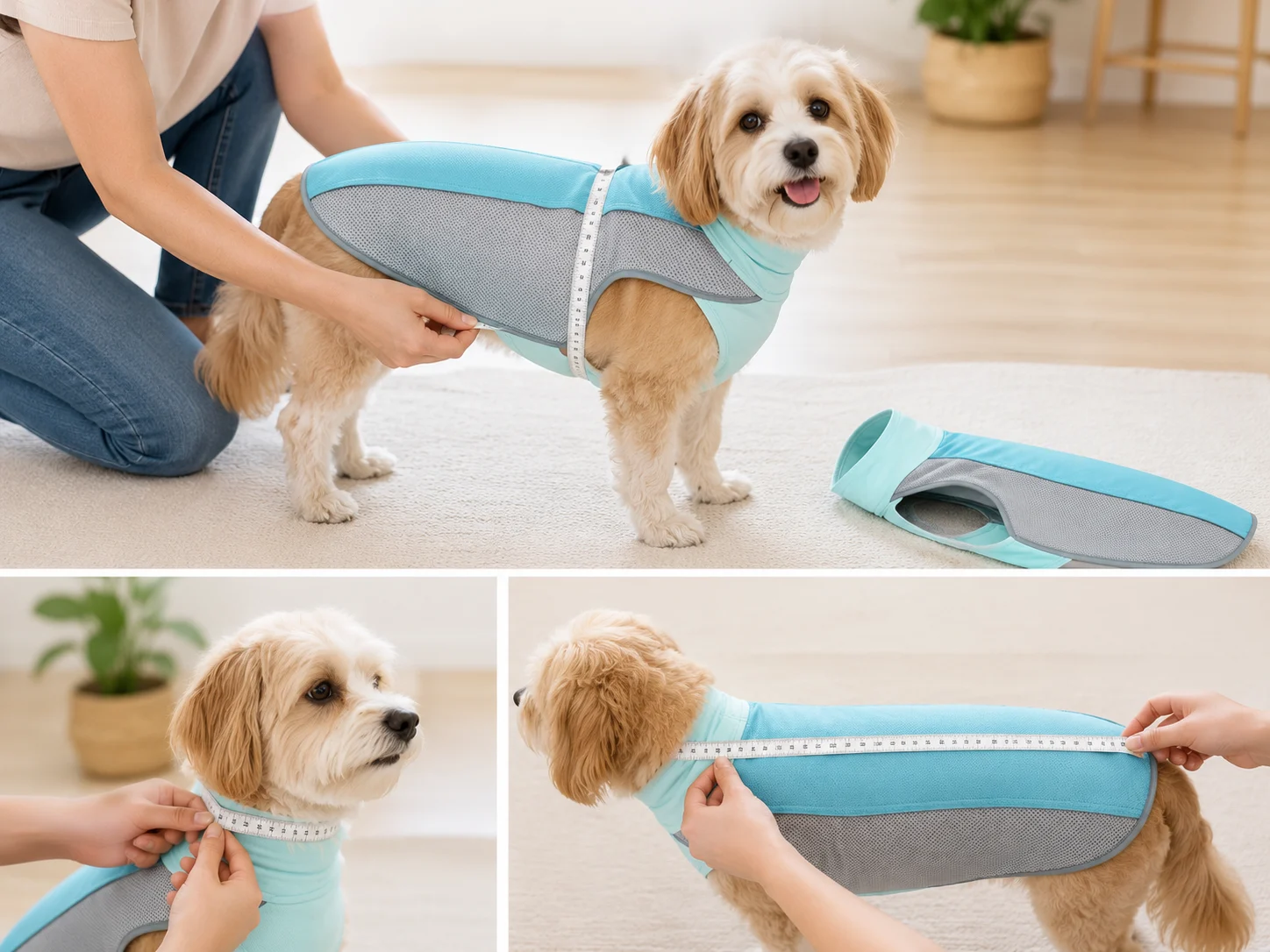
Before choosing a size, measure the dog’s chest girth, neck girth, and back length. The measurement image above shows the recommended method for reducing fit errors before sample approval or bulk purchase.
| Size | Chest Girth | Neck Girth | Back Length | Suggested Weight |
|---|---|---|---|---|
| S | 42–52cm | 35–45cm | 34cm | 10–18 |
| M | 52–64cm | 42–48cm | 38cm | 18–26 |
| L | 62–75cm | 48–56cm | 44cm | 26–40 |
| XL | 70–90cm | 56–66cm | 47cm | 40–60 |
Care Instructions
- Gentle hand wash or machine wash on cold cycle with mild detergent.
- Avoid bleach, fabric softeners, dry cleaning, tumble drying, and ironing.
- Air dry flat in a shaded area.
- Ensure the jacket is fully dry before storage to prevent mold or odor.
Product Testing Evidence: Do Dog Cooling Vests Work?
To support a more transparent product claim, SunPetJoy recorded internal sample test data under controlled room conditions. The test focused on surface temperature change, water absorption, evaporation duration, wash durability, and real wearing movement. These results help wholesale buyers answer the common customer question “do dog cooling vests work” with evidence instead of vague claims, while also understanding how the Cooling Jacket For Dogs performs beyond appearance-only evaluation.
Test Conditions
- Test sample: Size M Cooling Jacket For Dogs
- Material: Polyester with breathable gray mesh side panels
- Room temperature: 30.2°C
- Relative humidity: 52%
- Airflow: Approx. 1.0 m/s indoor fan airflow
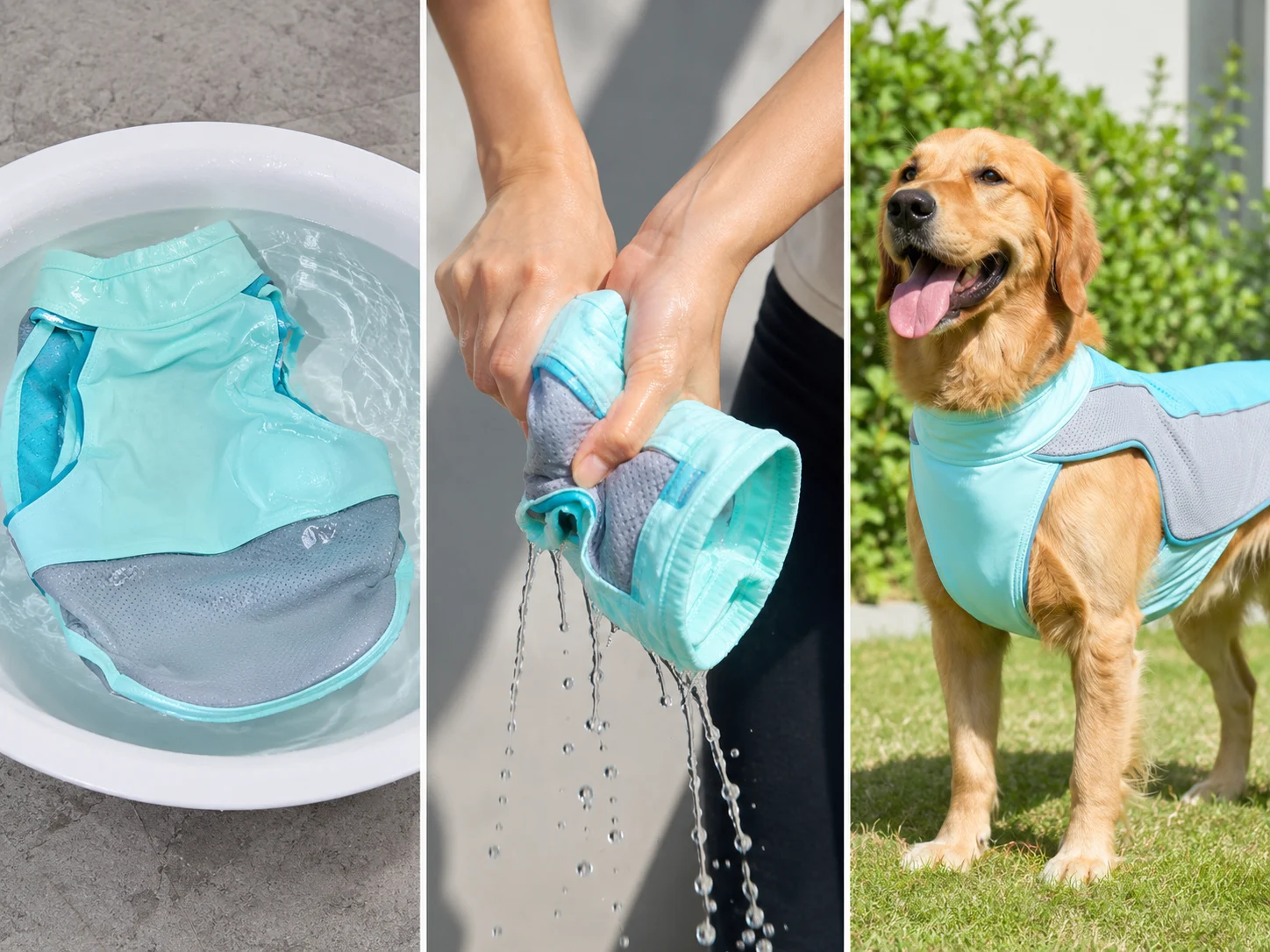
- Water activation method: Soak for 60 seconds, gently wring by hand for 10 seconds
- Testing tools: Digital scale, infrared thermometer, thermal camera, soft measuring tape
| Test Item | Test Method | Measured Data | Buyer Value |
|---|---|---|---|
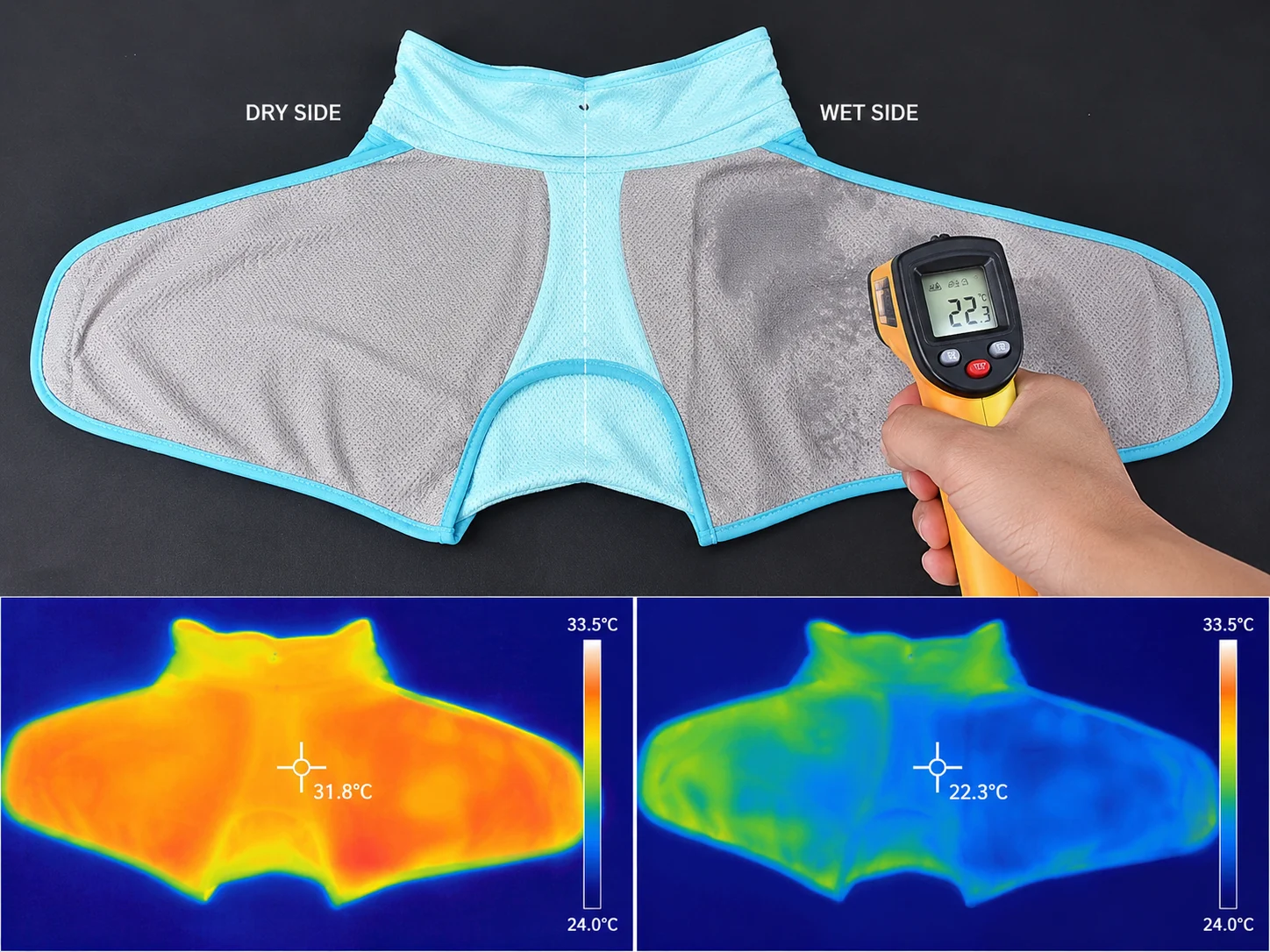
| Surface temperature comparison | Compare dry fabric and water-activated fabric with an infrared thermometer and thermal camera under the same temperature, humidity, and airflow conditions. | Dry fabric surface: 31.8°C Wet fabric after 5 min: 22.3°C Wet fabric after 15 min: 24.6°C Wet fabric after 30 min: 26.8°C Maximum observed difference: 9.5°C lower than dry fabric | Helps buyers verify that the fabric creates a visible cooling effect after water activation, one of the main dog cooling vest benefits customers expect in summer. |
| Water absorption rate | Weigh the dry jacket, soak for 60 seconds, gently wring by hand, then weigh again. | Dry weight: 94g Wet weight after wringing: 217g Water retained after wringing: 123g Absorption rate: 130.9% | Shows how much water the jacket can hold to support evaporative cooling during summer use. |
| Evaporation duration | Place the water-activated jacket under fixed room conditions and record weight every 15 minutes. | Starting wet weight: 217g 15 min: 184g 30 min: 153g 45 min: 128g 60 min: 110g 90 min: 95g Return-to-dry time: About 90 minutes | Gives retailers realistic information about cooling duration instead of vague “long-lasting cooling” claims. |
| Wash durability | Cold wash and air dry for 10 cycles, then inspect fabric surface, seams, color, edge binding, and dimensions. | Wash cycles: 10 Chest girth change: -0.5cm Neck girth change: -0.2cm Back length change: -0.3cm Color bleeding: Not observed Seam condition: Pass Edge binding condition: Pass | Supports durability claims and helps reduce return risk for retailers and private-label sellers. |
| Fit movement test | Test walking, sitting, turning, lying down, and chest expansion on different dog sizes. | S size sample dog: Pass M size sample dog: Pass L size sample dog: Pass XL size sample dog: Pass Chest restriction: Not observed Shoulder movement: Normal Jacket slipping during walking: Not obvious | Confirms whether the jacket supports real movement without restricting chest, shoulder, or daily activity. |
Testing note: Results are based on internal sample testing under controlled room conditions. Actual cooling duration may vary depending on outdoor temperature, humidity, airflow, dog activity level, coat type, and water activation method.
Fabric Specification Comparison for Summer Dog Apparel
Material choice directly affects wearing comfort, product weight, drying speed, and customer satisfaction. For summer dog apparel, the best material is not always the thickest or softest. This matters for retailers comparing canine cooling vests, cold vest for dogs concepts, and breathable cooling clothes for dogs. It should balance airflow, durability, shape retention, and moisture behavior.
| Material Type | Cooling Potential | Strength | Limitation | Best Use |
|---|---|---|---|---|
| Lightweight polyester | Good breathability and quick-dry potential. | Durable, stable, suitable for repeat production. | Cooling performance depends on construction and usage. | Wholesale cooling jacket, dog cooling vest, canine cooling vests, summer outdoor wear. |
| Mesh polyester | High airflow. | Light and breathable. | May have lower structure and lower sun coverage. | Ventilation panels, summer dog shirts. |
| Cotton blend | Absorbs moisture but may dry slowly. | Soft hand feel. | Can become heavy when wet. | Casual indoor apparel, not ideal for cooling performance. |
| PCM insert fabric | Controlled cooling in specific temperature range. | More technical product positioning. | Higher cost, added weight, more complex use instructions. | Premium functional cooling products. |
Practical Scenario Cases: Where Cooling Jackets Make Sense
Pet Store Summer Display
A pet store displays the jacket with a water bottle, paw balm, and summer safety signage. Staff explain that dogs sweat mainly through paws and need extra cooling support during hot-weather routines.
E-Commerce Product Listing
An online seller uses clear size charts, chest measurement guidance, and breathable fabric images to reduce fit confusion and return risk.
Outdoor Pet Brand Bundle
A private-label brand bundles the cooling jacket with travel bowls and reflective leashes for summer outdoor collections, positioning the line as practical cooling gear for dogs rather than ordinary seasonal clothing.
Practical Summer Care Tips Beyond the Jacket
A cooling jacket is only one part of summer care. The safest approach combines product support with owner behavior, whether the customer calls it a cooling pet vest, dog cooling vest, or canine cooling jacket. Retailers should educate customers clearly so the product is understood as comfort support, not a replacement for heat-safety decisions.
- Walk dogs early in the morning or later in the evening when ground temperature is lower.
- Carry fresh drinking water and offer frequent breaks.
- Choose shaded routes and avoid direct sun exposure during peak heat.
- Test pavement with the back of your hand before walking.
- Stop activity if the dog shows heavy panting, drooling, weakness, confusion, vomiting, or collapse.
- Never leave a dog unattended in a parked vehicle.
- Use the cooling jacket as part of a broader cooling routine, not as a medical solution.
Recommended Reading and Product Links
Internal Links
FAQ: Dogs Sweating, Heat Risk, and Cooling Jackets
Do dogs sweat through paws?
Yes. Dogs sweat mainly through their paw pads, but the cooling effect is limited. Panting, airflow, water, shade, and rest are much more important for summer cooling.
Can a cooling vest for dogs prevent heatstroke?
No product should be marketed as guaranteed heatstroke prevention. A cooling vest for dogs can support comfort, but owners must still avoid peak heat, provide water, use shade, and watch for warning signs.
How should retailers explain this product?
A simple explanation works best: dogs do not cool down through full-body sweating, so breathable summer apparel can help reduce heat-trapping discomfort during warm-weather routines.
What are the main dog cooling vest benefits?
The main dog cooling vest benefits are lighter summer comfort, reduced heat-trapping around the body, easier product education for retailers, and better outdoor-use positioning when the vest is used with shade, water, airflow, and rest breaks.
Is an ice vest dogs product the same as an evaporative dog cooling vest?
Not always. A dog ice pack vest or cold vest for dogs may use frozen inserts or gel packs, while an evaporative dog cooling vest usually relies on water activation, airflow, and moisture evaporation. Retailers should explain the difference clearly to avoid unrealistic customer expectations.
Are canine cooling vests suitable for all summer activities?
Canine cooling vests are best used for controlled warm-weather routines such as short walks, shaded outdoor rest, travel breaks, and summer retail displays. They should not encourage intense exercise during peak heat or replace responsible heat-safety decisions.
What customization options are available?
SunPetJoy supports custom colors, logos, sizing, labels, hangtags, polybags, barcode labels, and packaging. MOQ is 50 pieces per design/color, with customization starting at just 50 units.