


Litter Mat For Cats
Premium TPE honeycomb cat litter mats with modular interlocking design, effective litter-trapping surface, soft paw-friendly texture, and multi-color options for bulk wholesale supply.
Product Overview & Key Advantages
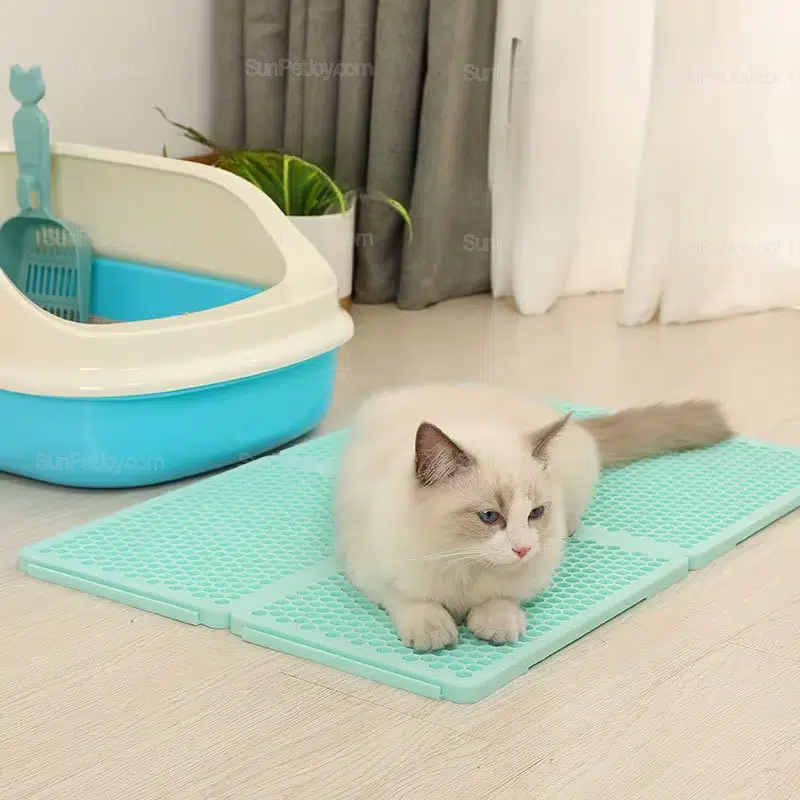
The litter mat for cats consists of TPE material formed into a honeycomb structure with modular interlocking edges. Each unit measures 300mm by 200mm and connects seamlessly to create larger surfaces. This design suits pet supply wholesalers, retail store owners, e-commerce sellers, and brand developers seeking reliable litter management solutions that integrate with standard cat litter boxes. Businesses gain from reduced inventory complexity through modular sizing, while end users experience less scattered litter around litter boxes. The material supports repeated flexing without cracking, which maintains performance over time and supports consistent product availability for repeat wholesale orders.
- The TPE composition delivers flexibility that withstands repeated bending and unfolding cycles, allowing the mat to retain its shape during shipping and daily use. This property reduces product returns for retailers and supports higher inventory turnover rates for wholesalers managing multiple stock-keeping units.
- Soft surface texture cushions feline paws during entry and exit from litter boxes, minimizing discomfort that can lead to avoidance behaviors. Pet owners report fewer tracking incidents, which translates to higher customer satisfaction and increased repeat purchases for store operators stocking this item.
- Honeycomb cavities capture and hold loose litter particles effectively, containing mess within the designated area. This functional aspect helps retailers demonstrate clear value to customers seeking practical solutions, often resulting in stronger brand differentiation against basic flat mats.
- Modular interlocking edges enable extension to custom dimensions without additional tools or connectors. Wholesalers benefit from streamlined stocking of one size that adapts to varied customer needs, lowering warehouse space requirements and improving order fulfillment efficiency.
- Available in multiple colors, the mats match common interior palettes and support visual merchandising in physical stores. This adaptability aids e-commerce sellers in creating appealing product listings that attract broader buyer segments and support seasonal display updates.
Manufacturing Process
Production starts with selection of food-grade TPE pellets suited for flexibility and durability, which are then fed into injection molding machines fitted with standard three-zone screws. These machines plasticize the material at controlled temperatures typical for TPE processing, allowing the molten material to fill precision molds that form the honeycomb pattern and interlocking tabs in a single cycle. Following this, molded sections undergo cooling within the mold, automated ejection, and trimming of any flash, after which interlocking features receive additional alignment checks paired with quality inspection for surface uniformity and edge integrity.
Multiple machine types, including conventional injection systems and overmolding setups, allow scaling from small batches to high-volume runs while maintaining consistent part dimensions. Final steps include packaging in bulk quantities suitable for wholesale distribution. This integrated sequence ensures dimensional accuracy and material consistency across large orders, which minimizes defects and supports reliable delivery timelines for supply chain partners.
Application Scenarios
Pet stores arrange multiple mats around litter box displays to showcase containment performance. This setup encourages impulse buys from customers who observe reduced floor mess and experience greater convenience during routine cleaning. Similarly, e-commerce sellers feature the modular design in product bundles with litter boxes. These bundles create upsell opportunities that increase average order value while providing end users with complete litter management sets.
Wholesalers supply bulk quantities to grooming salons or boarding facilities, where extended mat configurations cover larger floor areas. Such arrangements help maintain clean environments that support client retention through visible hygiene standards. In addition, brand developers incorporate custom color selections into private-label lines for pet subscription boxes. This approach offers differentiation that strengthens retailer partnerships and encourages recurring consumer orders.
Storage and Care Instructions
These guidelines support proper inventory storage for wholesalers and provide retailers with clear care instructions to share with end-users. By following them, businesses can help reduce returns and extend product life. Store flat or rolled loosely in dry, ventilated areas away from direct sunlight, extreme temperatures, and moisture to preserve material flexibility. Avoid stacking heavy items directly on mats or prolonged tight folding; instead, use shelving or original bulk packaging to maintain shape integrity. Apply first-in-first-out rotation and inspect edges periodically for any deformation during warehouse handling.
For routine cleaning, wipe surfaces with a damp cloth or perform gentle hand washing using mild, fragrance-free soap while avoiding machine washing, bleach, or dry cleaning cycles. Address localized stains with pet-safe enzymatic cleaners diluted in water, followed by thorough rinsing to remove residue. Allow complete natural air drying in a shaded location before returning to use or repackaging to prevent moisture retention. Finally, confirm full dryness prior to reinstallation near litter boxes to maintain optimal performance and hygiene. Adhering to these practices minimizes quality issues and supports stable wholesale demand.
Specifications
| Parameter | Details |
|---|---|
| Material | TPE |
| Dimensions | 300mm x 200mm per unit |
| Design | Honeycomb surface with interlocking edges |
| Color Options | Pink, cyan, gray, black, and additional shades |
Material: TPE. Colors: pink, cyan, gray, black and more.
Custom specifications are available upon request.
OEM & ODM Customization
Partners can adjust color palettes, extend modular sizes through additional interlocking units, add printed logos or labels, modify packaging formats, and incorporate accessory elements such as edge trim. Typical collaboration begins with sample requests for evaluation, followed by production adjustments based on project volume. Color and pattern variations support brand-specific aesthetics for private label programs. Size scaling through additional modules accommodates unique retail display requirements. Logo placement and custom labeling enhance product identity in competitive marketplaces. Packaging options range from bulk cartons to retail-ready bundles, aligned with distribution channels. This flexibility enables brands to develop distinctive product lines that address specific market segments while delivering consistent comfort and functionality for pets and convenience for owners.
FAQ
What is the minimum order quantity?
Minimum order quantities vary by project and can be discussed based on specific requirements.
Can samples be provided before bulk purchase?
Yes, samples are available to evaluate fit and performance prior to larger commitments.
How does the customization process work?
Submit requirements for color, size, or branding; receive confirmation and samples for approval before production begins.
What is the typical production timeline?
Production schedules depend on order volume and customization level, with details provided after order confirmation.
How are products packaged for wholesale?
Standard packaging uses protective cartons suitable for bulk shipping; alternative formats can be arranged upon request.
Do we support global shipping?
Yes, our products support worldwide shipping to any country or location.
What quality checks occur during production?
Each batch undergoes inspection for dimensions, surface quality, and interlocking function before release.
What support is available after purchase?
Technical assistance and replacement guidance for verified defects are provided through standard channels.
Visual Manufacturing Process
Below are real production step photos of our litter mat for cats.
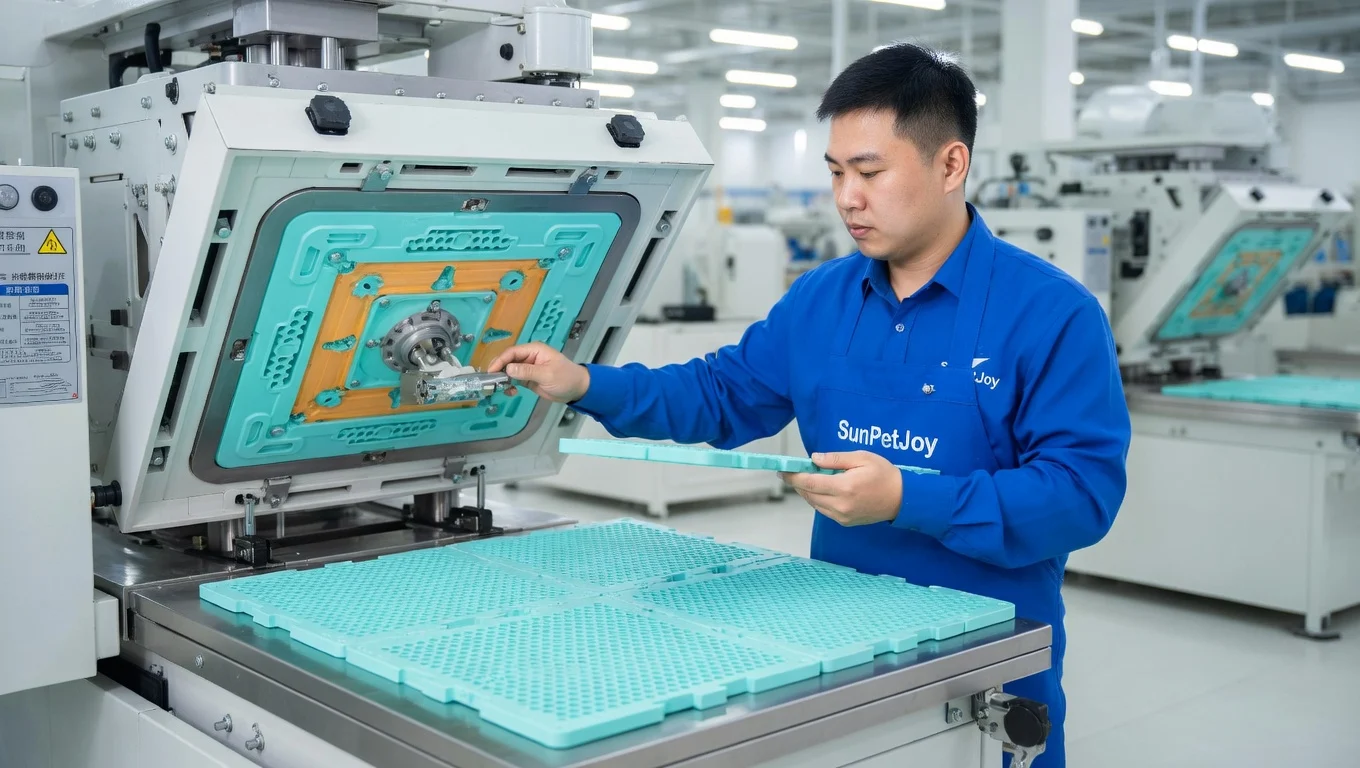 This is our precision injection molding operation, where food-grade TPE pellets are plasticized to form consistent honeycomb patterns and interlocking tabs in each modular litter mat, ensuring dimensional accuracy for wholesale supply.
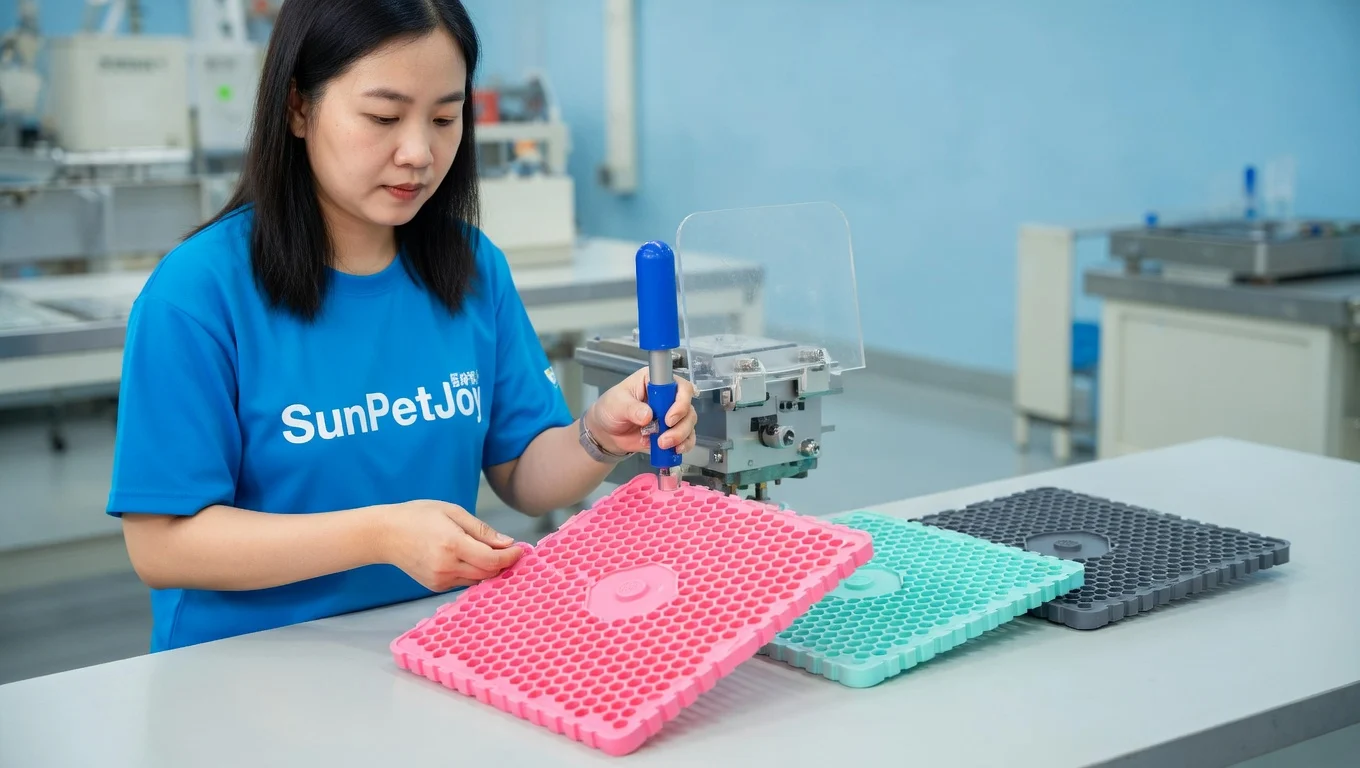 This is our automated ejection and trimming process, where flash is precisely removed from molded sections to deliver clean edges and maintain structural integrity across every litter mat batch.
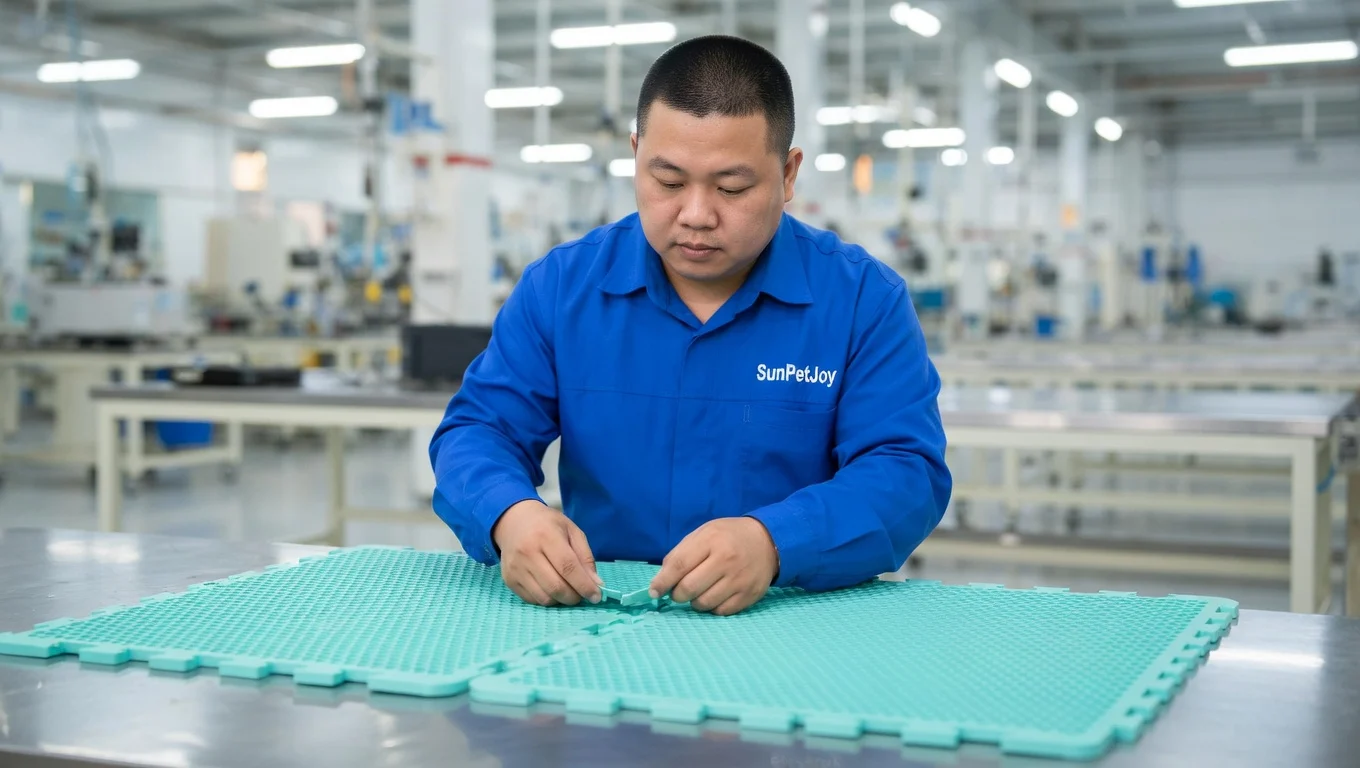 This is our detailed quality inspection stage, where alignment checks on interlocking edges and surface uniformity confirm consistent standards before products advance to packaging.
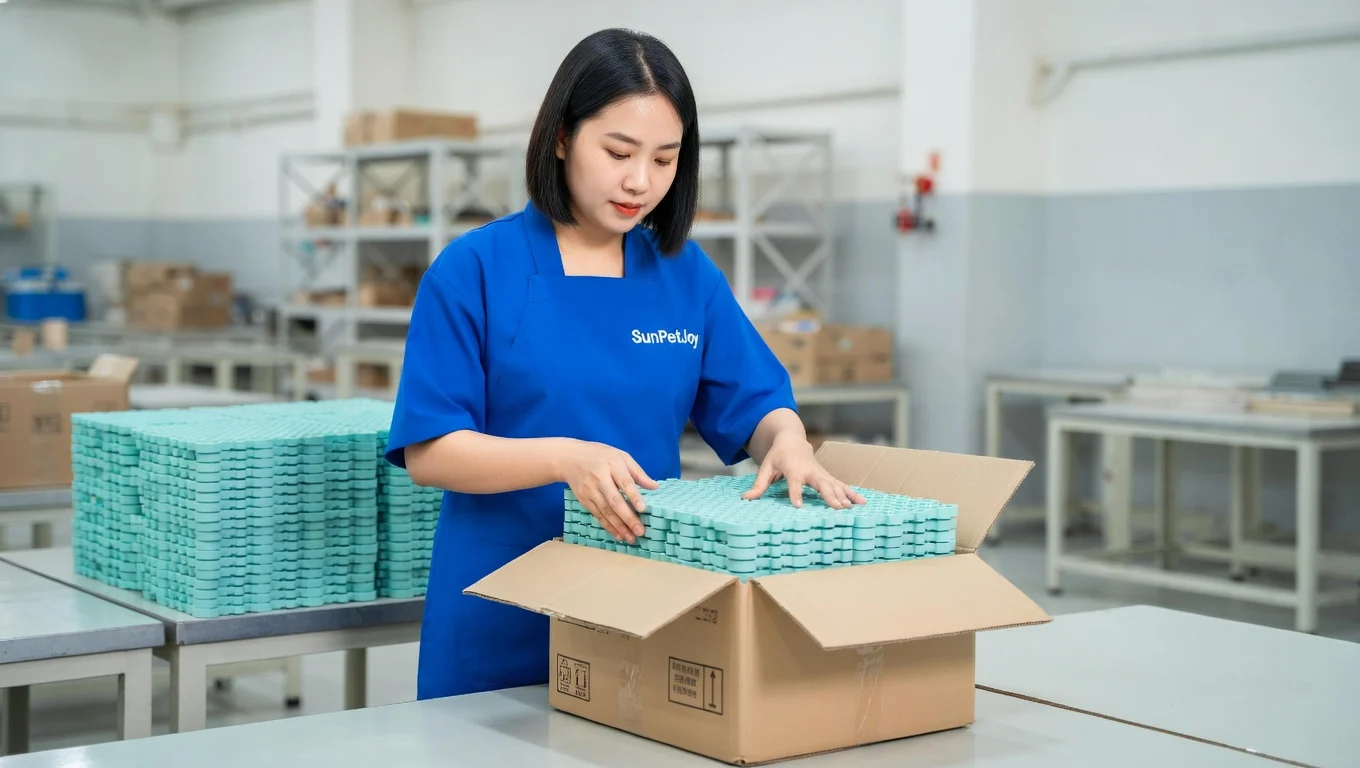 This is our bulk packaging procedure, where finished modular litter mats are securely placed into wholesale cartons to protect quality and support reliable large-scale distribution.